Neolia : A Case Study
Context
Neolia is a conceptual VC-style presentation designed to explore how dense strategic content can be translated into a structured and scalable visual system. The initial material consisted of text-heavy documentation covering market opportunity, funding strategy, operations, and roadmap planning.
The objective was to transform this raw content into a coherent, decision-oriented presentation framework.
Challenge
The main challenge was converting complex, text-dominant information into a clear visual hierarchy without oversimplifying key strategic insights.
This required structuring content logically, identifying core messages, and ensuring that each slide contributed to a cohesive narrative rather than functioning as isolated visual elements.
Process
I began by deconstructing the raw written material into thematic categories and reorganizing it into a logical VC deck structure.
From there, I developed a consistent layout system based on:
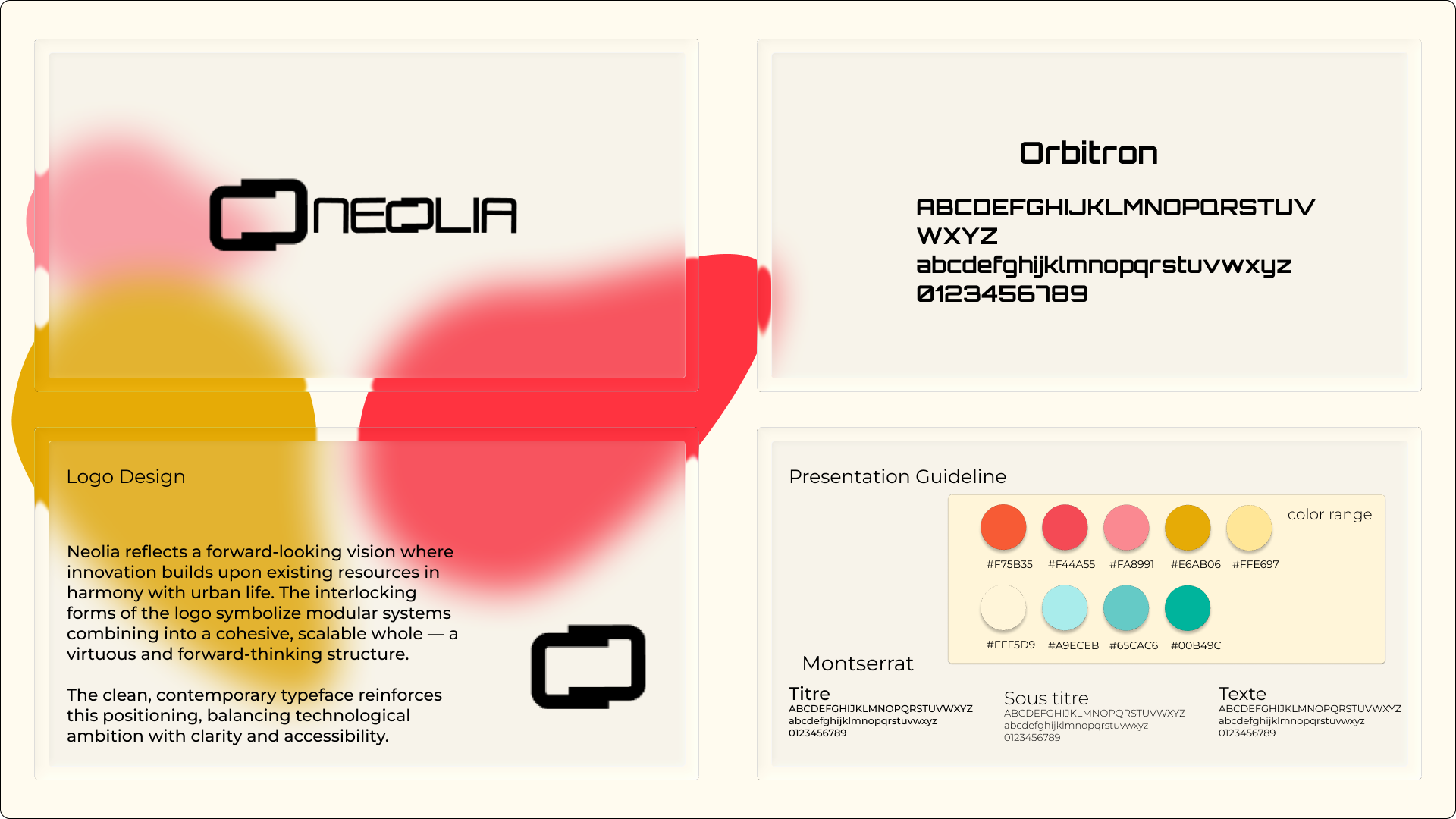
Clear typographic hierarchy
Modular grid structures
Visual grouping of related information
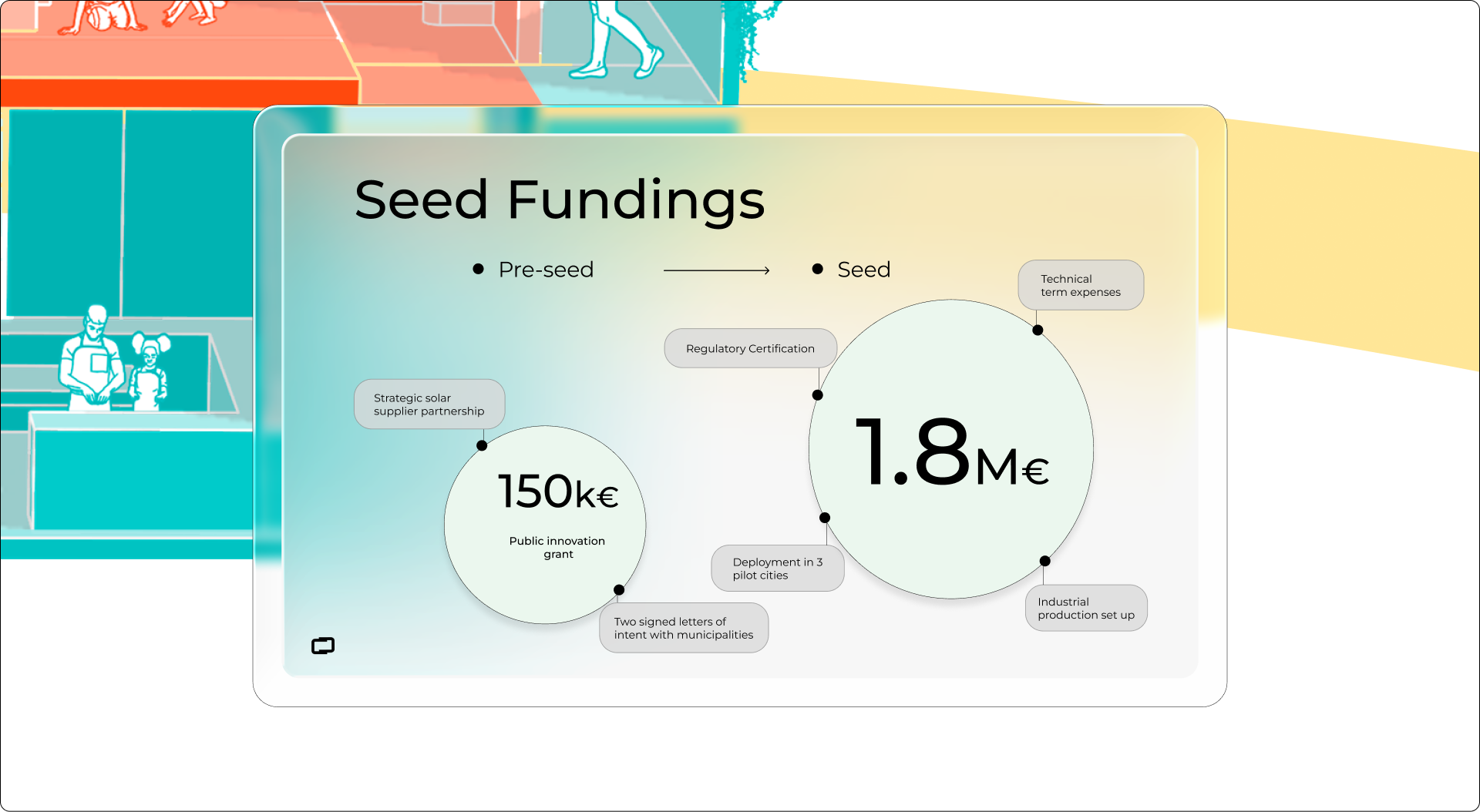
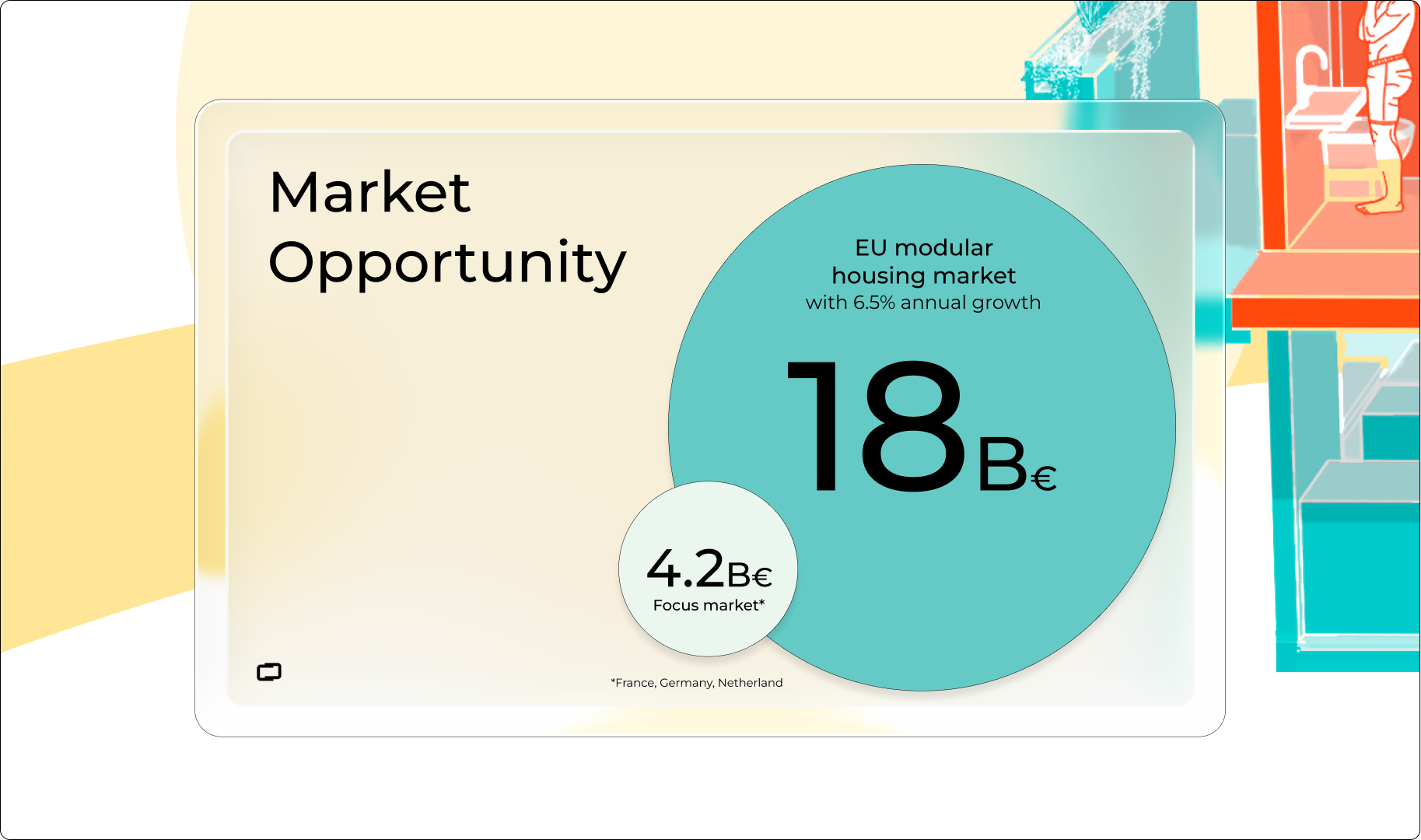
Emphasis on key numerical data
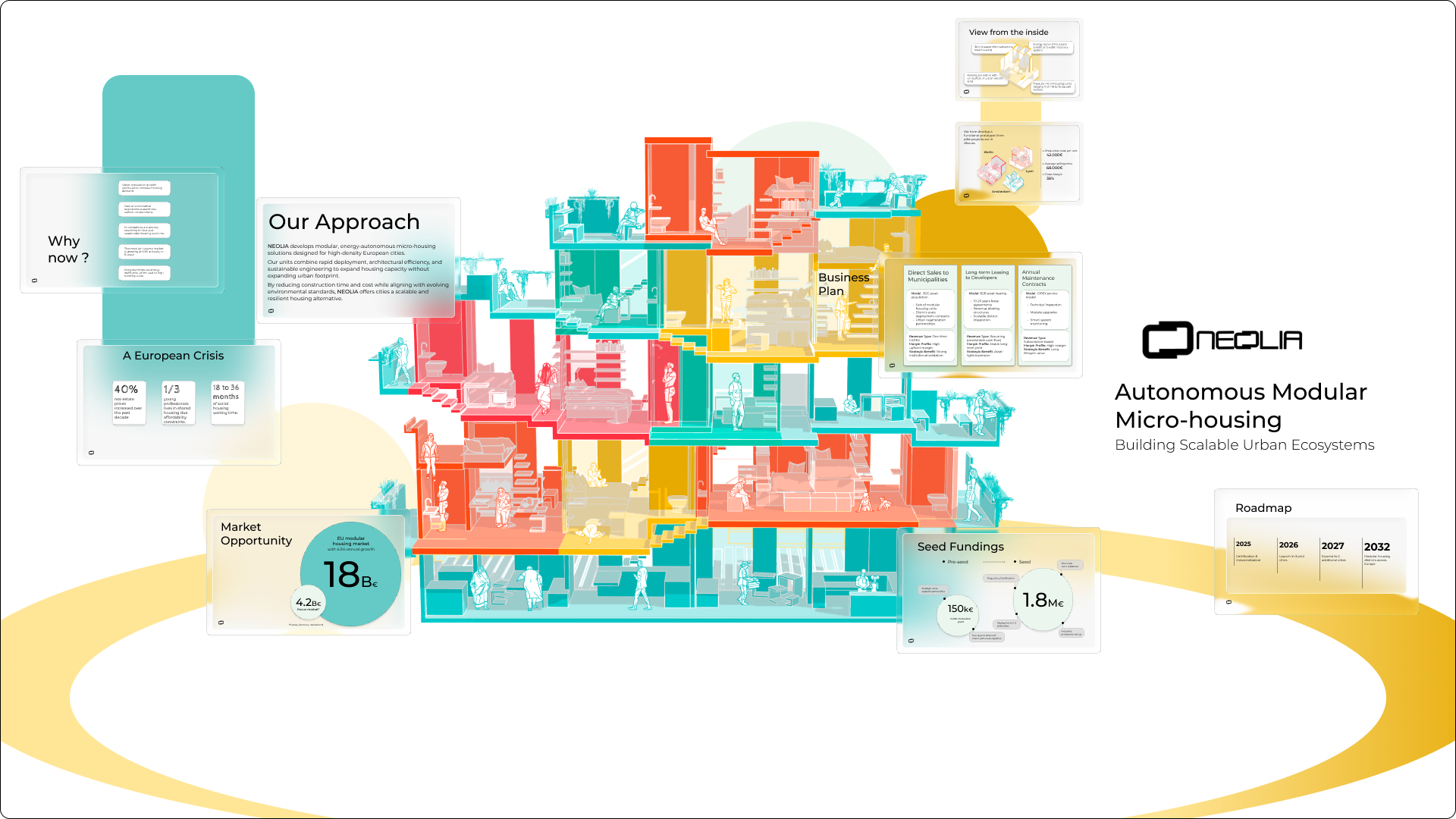
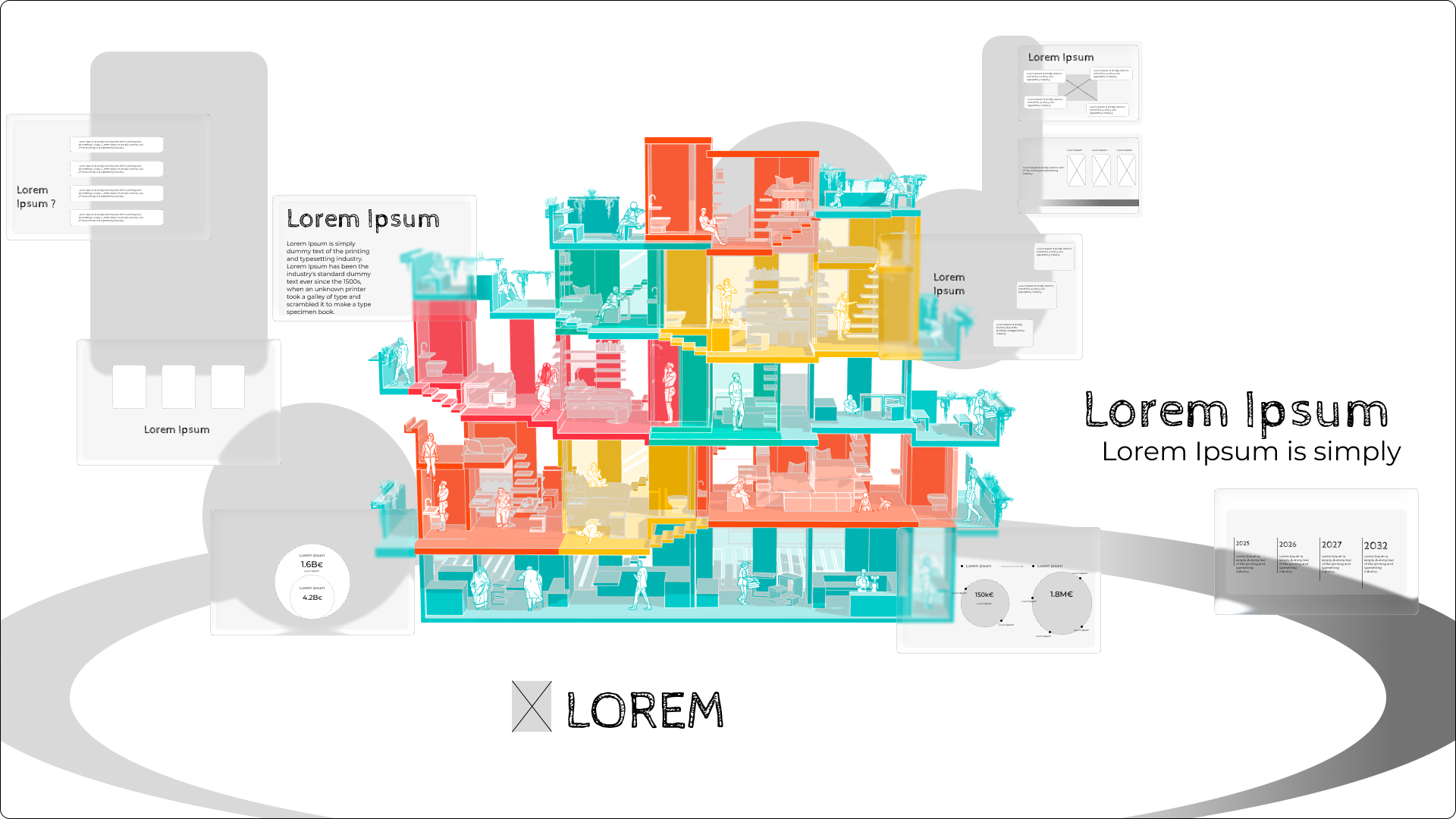
Complex explanations were translated into diagrams, architectural visuals, funding breakdowns, and timeline graphics to reduce cognitive load and improve scannability.
While initially exploring a mind-map inspired presentation model, I ultimately adopted a linear structure to ensure clarity and professional applicability.
Outcome
The result is a structured, visually coherent presentation system that prioritizes clarity, hierarchy, and strategic communication.
The project demonstrates the ability to transform abstract business narratives into accessible visual frameworks suitable for investment and decision-making contexts.
Reflection
Neolia strengthened my ability to synthesize dense information, build scalable visual systems, and communicate strategic content with precision and clarity.
Skills Demonstrated
Information hierarchy design
Translation of dense research into visual systems
Data emphasis and numerical prioritization
Slide deck structuring (VC / strategic format)
Diagrammatic thinking and system visualization
Layout grid development and consistency
Visual communication for decision-making contexts
Balancing clarity with creative exploration
Narrative structuring across multi-slide presentation